Earth’s Magnetic Field Is Changing Faster Than Expected — Are We Near the Earth's Shift?
This article explains what is happening to Earth’s magnetic field, why scientists are concerned, and whether a catastrophic Earth's shift can still be prevented.
How Earth’s Magnetic Field Protects Life

Earth is surrounded by an invisible magnetic shield generated deep within its core. This field deflects charged particles from the Sun and prevents the atmosphere from being stripped away by solar wind.
Without a stable magnetic field:
- Cosmic radiation would increase dramatically
- Satellites and power grids would be exposed to damage
- Earth’s climate system would destabilize
Evidence of Magnetic Pole Drift and Weakening
Accelerated Movement of the Magnetic North Pole
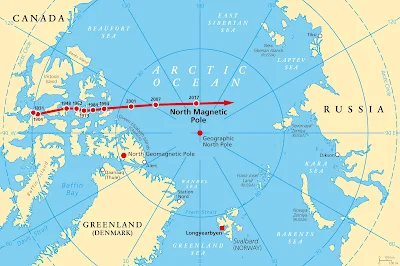
Since the late 20th century, scientists have observed that:
- Earth’s axis of rotation is slowly shifting
- The magnetic north pole is moving faster than ever recorded
- Auroras are appearing at unusually low latitudes
Satellite missions such as ESA’s Swarm confirm that Earth’s magnetic field strength has declined significantly over recent decades.

The South Atlantic Anomaly
One of the most alarming signs is the South Atlantic Anomaly — a growing region where Earth’s magnetic field is exceptionally weak.Consequences include:
- Increased radiation exposure for satellites
- Atmospheric density loss in upper layers
- Technological disruptions
What Causes Changes in Earth’s Magnetic Field?
Earth’s Core and the Geodynamo
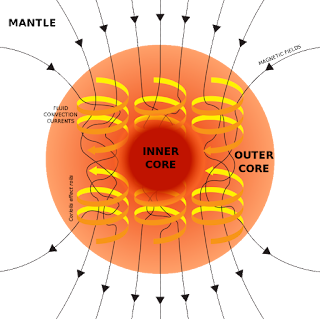
Earth’s magnetic field is generated by the geodynamo — the motion of molten iron in the planet’s outer core.
- Inner core: solid iron
- Outer core: liquid molten iron
- Continuous motion generates electromagnetic forces
Any disruption in this system affects:
- Magnetic field stability
- Gravitational balance
- Global geophysical processes
Earthquakes, Magma Movement, and Global Instability
Scientists have detected:
- Rising magma toward Earth’s crust
- Increasing frequency of deep earthquakes
- High seismic activity near the Mariana Trench
These processes may be connected to magnetic instability and increasing stress within Earth’s interior.

Pole Reversal vs. Catastrophic Earth's Shift
Historically, magnetic pole reversals have occurred many times without destroying life. However, an abrupt the Earth's shift — involving rapid axial displacement — could result in global catastrophe.
Potential risks include:
- Extreme climate disruption
- Massive earthquakes and volcanic activity
- Collapse of ecosystems
Can Humanity Prevent a Global Cataclysm?
The Fulcrum Mechanism Hypothesis
According to the work presented by Aslan Uarziaty, a theoretical solution known as the fulcrum mechanism could stabilize Earth during a critical Earth's shift.
The concept proposes:
- The mechanism can remain in place (on the ground), setting the planet into a directed rotation towards the shifting magnetic field while controlling the desired speed, without relying on the external environment
- The installation itself serves as the fulcrum. This makes it possible to regulate the position of the Earth in the direction of the magnetic field shift and to catch up with it to bring the planet into a new position in time.
- The mechanism allows influencing planetary balance during magnetic instability
The idea suggests that technological intervention could slow or regulate Earth’s transition, buying time for natural systems to adapt. It can be constructed ONLY through the joint efforts of all countries.
.gif "The digit sums of numbers")
Why This Topic Matters Now
- Magnetic field changes are measurable and accelerating
- Satellite data confirms long-term weakening
- Global cooperation is required to mitigate risks
Ignoring these signals could leave humanity unprepared for a planetary-scale event.
Frequently Asked Questions
What is Earth’s magnetic field?
It is a protective electromagnetic field generated by molten iron movement in Earth’s outer core.
Are magnetic pole reversals normal?
Yes. They have occurred many times in Earth’s history, usually over thousands of years.
Is a pole shift different from a pole reversal?
Yes. A pole shift implies rapid axial movement, which could be catastrophic.
Is there a way to prevent an Earth's shift?
There is a theoretical model, such as the fulcrum mechanism, that must be tested.
Video: Is Earth’s Pole Shift Approaching?
Connected article: Catastrophic Consequences of the Next Pole Shift Can Be Prevented Using the Fulcrum Mechanism